

NINNA.ID-The Batak understanding of the High God and the cosmic order is not limited to myth and belief—it is expressed practically through rituals and daily life.
Rituals, ceremonies, and social customs serve as a living bridge between the human community and the divine, ensuring that harmony is preserved across the three realms of existence.
- The Nature of Rituals
Batak rituals are communal acts that bring together families, clans, and sometimes entire villages. These are not only moments of worship but also events where social ties are affirmed.
Through ritual, the Batak recognize their dependence on divine powers and their obligations to one another.
Rituals often involve:
- Offerings (tudu-tudu sipanganon – symbolic food and gifts).
- Sacrificial animals, which carry prayers and offerings to the divine.
- Chants, prayers, and myths recited by the ritual specialist (datu).
- Sacred objects, such as staffs, ritual books (pustaha), and woven cloths (ulos) that carry symbolic meaning.
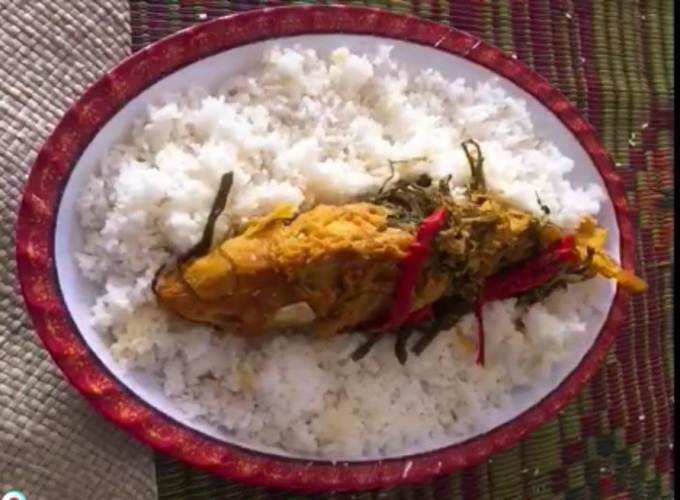
Arsik goldfish is an important part of Batak Toba cultural rituals. (Photo: doc.ninna)
- Life-Cycle Ceremonies
Religious practices are deeply woven into the life cycle of the Batak. Each major stage of life is marked by ritual acts:
- Birth and Naming: A newborn is welcomed with prayers to secure protection from the High God and the ancestors. Naming ceremonies affirm the child’s place in the kinship system.
- Marriage: Weddings are highly ritualized, involving exchanges of ulos and offerings that symbolize fertility, harmony, and unity between families.
- Death and Ancestor Veneration: Funerals are among the most important ceremonies. The dead are honored with offerings and remembered as guardians of the living. In some traditions, secondary burial rituals elevate the deceased to the status of an ancestral spirit.
These rituals affirm that life is never lived in isolation—it is part of a spiritual and social continuum that stretches from the High God to ancestors, kin, and future generations.
- Agricultural and Communal Rituals
Because the Batak traditionally depended on farming, especially rice cultivation, many rituals focus on agriculture and fertility.
- Blessing the fields before planting ensures harmony between humans, the earth, and the High God.
- Harvest rituals express gratitude for abundance and reaffirm the community’s dependence on divine blessing.
- Protective rites guard against misfortune, disease, or natural disasters, often involving offerings to both benevolent and potentially harmful spirits.
Such ceremonies reflect the Batak belief that agriculture is not merely economic but sacred, tied to cosmic balance and divine favor.
- The Role of the Datu in Ritual
The ritual expert, or datu, is indispensable in guiding these ceremonies. They:
- Read omens and determine auspicious times.
- Interpret dreams, illnesses, or misfortunes as signs of cosmic imbalance.
- Perform healing rituals, sometimes involving chants, herbs, or sacred manuscripts (pustaha).
The datu thus acts as a cultural and spiritual authority, ensuring that rituals maintain harmony between the three realms.
- Rituals as Social Order
Rituals are not only religious—they are also a form of law and governance. They regulate kinship relations, inheritance, and obligations between clans. Breaking ritual obligations could lead to disharmony, conflict, or misfortune, interpreted as a sign that the cosmic balance has been disturbed.

Through rituals, the Batak affirm values of cooperation, respect for ancestors, and balance with nature. In this sense, rituals are the heartbeat of Batak society, uniting the sacred and the social.
Conclusion
Batak rituals reveal the practical dimension of their religious worldview. Every ceremony—from birth to death, from planting to harvest—serves to maintain the fragile harmony of the cosmos.
The High God, while distant and transcendent, is made present in daily life through these acts of worship, guided by the wisdom of the datu and sustained by the solidarity of the community.
Thus, ritual is not a separate religious sphere but an integral part of Batak social life and identity.
Writer/Editor: Damayanti Sinaga